Pienza & Val d'Orcia: The Ultimate Day Trip Guide from Florence
If you're staying in Florence near Santa Maria Novella station and want to escape the crowds to experience the breathtaking Tuscan countryside, the Pienza and Val d'Orcia region offers one of Italy's most iconic and photogenic landscapes. This comprehensive guide will help you plan the perfect day trip to see Renaissance architecture, cypress-lined avenues, and rolling golden hills.
Why Pienza & Val d'Orcia Should Be on Your Tuscan Itinerary
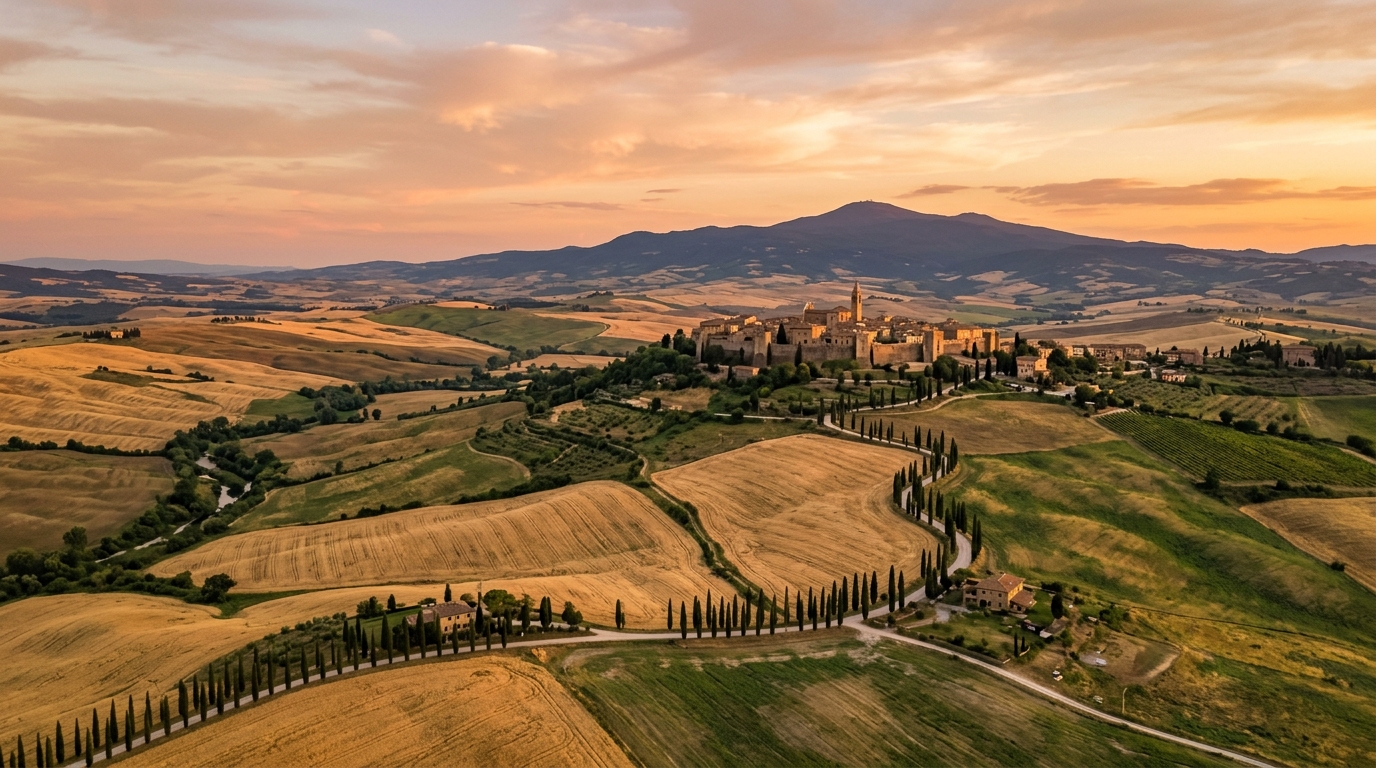
Val d'Orcia, a UNESCO World Heritage Site located in the heart of Tuscany, represents the pinnacle of Italian Renaissance ideals. The valley, named after the Orcia River, encompasses some of the most recognizable landscapes in Italy—those undulating hills of wheat and barley fields you've seen in countless photographs and films.
Pienza, perched on a hilltop overlooking the valley, is a masterpiece of Renaissance urban planning. Built in the 15th century under the patronage of Pope Pius II, the entire town was designed according to humanist ideals and architectural principles. Every street, every plaza, every building follows a vision of the perfect city.
The combination of Pienza's architectural perfection and Val d'Orcia's natural beauty creates a day trip destination that satisfies both culture enthusiasts and nature lovers. Whether you're a photographer seeking the golden hour light on wheat fields, a history buff interested in Renaissance design, or simply someone wanting to experience authentic Tuscany, this region delivers.
Getting There from Florence
By Car (Recommended)
The most convenient way to visit Pienza and Val d'Orcia from Florence is by car. The drive takes approximately 2 to 2.5 hours covering around 200 kilometers (125 miles).
Route:
- From near Santa Maria Novella station, head south on the A1/E35 towards Rome for about 40 km
- Take exit 4 towards Montepulciano
- Follow signs towards Pienza (about 30 km from the highway exit)
Pro tip: If you're staying near Santa Maria Novella, you can pick up a rental car at Hertz or Enterprise located near the station. Book online beforehand to secure better rates.
By Organized Tour
If you prefer not to drive, several companies offer full-day or half-day tours from Florence that include:
- Hotel pickup from your accommodation near Santa Maria Novella
- Transportation to both Pienza and Val d'Orcia
- Professional guide services
- Wine tasting at a local producer
- Lunch at a countryside restaurant
Tours typically cost €80–150 per person and depart early morning (7–8 AM), returning around 7–8 PM.
By Public Transport (Budget Option)
Public transport is slower but possible:
- Take a train from Florence to Montepulciano (2–3 hours, requiring transfers)
- From Montepulciano, take a local bus (SITA) to Pienza (20 minutes)
This route works best if you combine it with exploring Montepulciano, another stunning Renaissance hilltop town.
Pienza: Architecture, History & Exploration
About Pienza
Pienza was the birthplace of the Renaissance concept of the "ideal city." Pope Pius II, born Enea Silvio Piccolomini in a small village near Pienza, commissioned architect Bernardo Rossellino in 1459 to transform his hometown into a perfect example of Renaissance urban design.
The plan was revolutionary for its time: a compact town center organized around a central piazza with harmonious proportions, unified architectural style, and each building serving a specific civic purpose. Though never fully completed as originally envisioned, Pienza remains one of the finest examples of Renaissance town planning in existence.
What to See in Pienza
Piazza Pio II (Main Square) The heart of Pienza is Piazza Pio II, a masterpiece of Renaissance urban design. The square is surrounded by the Cathedral (Cattedrale di Santa Maria Assunta), the Palazzo Piccolomini, the Palazzo Borgia, and the town hall. Stand in the center of the square and observe the proportions—each building's height and width relate to a specific mathematical ratio.
The Cathedral is notable for its elegant Renaissance façade and light-filled interior. It was designed to have an open, airy feeling—revolutionary for its time, as many churches were dark and imposing.
Palazzo Piccolomini This is the family palace of Pope Pius II, designed by Bernardo Rossellino. The palazzo features Renaissance architecture with graceful windows and classical elements. Part of the building is open to visitors and includes a museum displaying period furnishings, artworks, and documents related to the Piccolomini family.
Corso Rossellino This is Pienza's main street, lined with Renaissance façades, local shops, restaurants, and the famous Pecorino Romano cheese shops. The street gradually slopes downward toward the southern edge of town, offering beautiful views of the Val d'Orcia countryside.
Town Walls and Viewpoints Walk along the medieval town walls, particularly along the eastern edge, for spectacular views of the rolling countryside. The best sunset views are from the southern edge of town near the Porta del Murello.
Where to Eat in Pienza
Restaurants & Trattorias:
- Il Rossellino: Traditional Tuscan cuisine in a cozy atmosphere, famous for pappardelle ai cinghiale (wild boar pasta)
- Latte di Luna: Refined Tuscan dishes with a focus on local ingredients, reservations recommended
- Osteria Sette di Vino: Casual wine bar with excellent local wines and charcuterie boards
- Café Dolce Vita: Perfect for coffee and pastries in the morning before exploring
Quick Bites:
- Sample fresh Pecorino Romano cheese (Pienza's famous product) at shops along Corso Rossellino
- Try local honey, preserves, and pasta at specialty food shops
- Grab a panini from local bakeries for a picnic lunch
Dining Tip: Reserve tables at popular restaurants before visiting, especially during peak season (May–September). Many close on Mondays or Tuesdays during low season.
Val d'Orcia: The Tuscan Landscape You've Always Dreamed Of
Understanding the Valley
Val d'Orcia isn't a single attraction but rather an expansive rural landscape covering approximately 77 square kilometers (30 square miles). The valley is characterized by:
- Rolling wheat and barley fields that turn golden in late spring and summer
- Cypress tree avenues creating dramatic vertical lines across the landscape
- Farm buildings and villas scattered across the hillsides
- Small villages perched on ridges overlooking the valley
- Winding country roads perfect for scenic drives
The valley's distinctive appearance results from centuries of agricultural tradition combined with the region's geology. The soil and climate produce the specific crops grown here, and the Renaissance ideals of harmony with nature influenced the landscape design.
Best Photo Spots in Val d'Orcia
Cappella della Madonna di Vitaleta This small chapel standing alone in the wheat fields is perhaps the most photographed spot in Val d'Orcia. Located between Pienza and San Quirico d'Orcia, the chapel's isolation in the vast golden fields creates a powerful sense of solitude and harmony with nature.
Best time to photograph: Golden hour (early morning or late evening), especially during wheat harvest season (June–July) when the fields are golden. The road leading to the chapel is accessible by car via a rural lane.
Monte Amiata Views From various points around Pienza and throughout Val d'Orcia, the dormant volcano Mount Amiata creates a dramatic backdrop. The mountain's conical shape anchoring the landscape is particularly striking during sunrise and sunset.
Orcia River Valley Overlooks Several pulloffs along the roads provide panoramic views of the entire valley. Look for small parking areas along:
- The road between Pienza and San Quirico d'Orcia
- The scenic road from Montalcino towards Pienza
- Via Lauretana near San Quirico d'Orcia
Cypress Avenues Several long avenues lined with Italian cypress trees create naturally beautiful photographs. The most famous is near Montalcino and can be accessed via country roads. These photographs evoke classic Tuscan imagery.
Photography Tips for Val d'Orcia
| Timing | Conditions | Best For |
|---|---|---|
| Sunrise (6–7 AM) | Clear, soft light, long shadows | Dramatic contrast, cypress trees, lone buildings |
| Mid-morning (9–11 AM) | Bright, clear light | General landscape, architectural details |
| Afternoon (1–4 PM) | Hard light, strong shadows | Texture, contrast, dramatic clouds |
| Golden hour (6–8 PM) | Warm light, long shadows | Romantic warmth, wheat fields, sunset colors |
| Overcast days | Diffuse light, soft shadows | Subdued tones, atmospheric mood |
Equipment Recommendations:
- Wide-angle lens (16–35mm) for landscape panoramas
- Standard lens (50mm) for selective framing
- Telephoto lens (70–200mm) for compressing distances and isolating details
- Polarizing filter to enhance sky and reduce haze
- Neutral density filter for long exposures of moving clouds
Other Villages Worth Exploring
San Quirico d'Orcia
This medieval town sits at the southern entrance to the valley. Its historic center features:
- Romanesque church (Collegiata di San Quirico)
- Renaissance gardens (Horti Leonini)
- Historic town walls and gates
- Traditional restaurants and wine shops
Distance from Pienza: 20 km (30 minutes)
Montalcino
Famous for its Brunello wine, Montalcino perches on a hilltop south of the valley. Key attractions include:
- Medieval fortress with panoramic views
- Wine museums and tasting rooms
- Historic town center with narrow medieval streets
- Nearby Benedictine monastery (Sant'Antimo)
Distance from Pienza: 35 km (45 minutes)
Montepulciano
North of Val d'Orcia, this Renaissance town is known for its wine (Vino Nobile di Montepulciano). The town features:
- Beautiful Renaissance palaces along the main street
- Piazza Grande with the cathedral
- Numerous enotecas (wine bars) for tastings
- Underground wine cellars
Distance from Pienza: 15 km (25 minutes)
Wine & Food Experiences
Brunello Wine Region
Val d'Orcia is in the heart of Tuscany's premier wine country. The Brunello di Montalcino wine, made from Sangiovese Grosso grapes grown in this region, is among Italy's finest wines.
Wine Tasting Options:
- Wineries in Montalcino: Most offer tastings with advance reservation (€15–30 per person)
- Wine bars in Pienza and San Quirico: Casual tastings of local wines
- Organized wine tours: Available through your hotel or tour operators
Pecorino Romano & Local Cheese
Pienza is famous for Pecorino Romano cheese. Visit local cheese shops to:
- Sample aged varieties (1–3+ years old)
- Purchase vacuum-sealed cheese to take home
- Learn about the production process
- Enjoy cheese with local honey and wine
Traditional Tuscan Foods
| Dish | Description | Where to Try |
|---|---|---|
| Pappardelle ai Cinghiale | Wide pasta ribbons with wild boar ragù | Traditional trattorie throughout region |
| Bistecca alla Fiorentina | Large grilled T-bone steak with olive oil | Upscale restaurants and steakhouses |
| Ribollita | Hearty Tuscan vegetable and bread soup | Casual restaurants, perfect for lunch |
| Pecorino Fresco | Fresh sheep's milk cheese | Pienza cheese shops, very creamy |
| Salami Toscani | Cured meat from free-range pigs | Butchers and food shops |
| Acquacotta | "Poor man's soup" with vegetables and local herbs | Traditional trattorias |
Planning Your Perfect Day Trip
Suggested Itinerary
Early Morning (7:00–8:30 AM)
- Depart Florence near Santa Maria Novella station
- Drive towards Pienza (2–2.5 hours)
- Stop for breakfast in a small village or at your hotel before departure
Late Morning (9:00–12:00)
- Arrive in Pienza
- Park and explore Piazza Pio II and the Cathedral
- Walk along Corso Rossellino
- Visit Palazzo Piccolomini if desired
Lunch (12:00–2:00 PM)
- Enjoy lunch at a restaurant in Pienza
- Sample local cheese and wine
- Rest and recharge for afternoon photography
Afternoon (2:00–6:00 PM)
- Drive through Val d'Orcia, stopping at scenic viewpoints
- Visit Cappella della Madonna di Vitaleta
- Explore San Quirico d'Orcia if time permits
- Take photographs during changing light conditions
Golden Hour (6:00–8:00 PM)
- Position yourself at a prime photography location
- Photograph sunset and late afternoon light
- Stop for aperitivo (drinks and appetizers) at a countryside restaurant
Evening (8:00–10:30 PM)
- Drive back to Florence
- Arrive at your accommodation near Santa Maria Novella around 10:30 PM
What to Pack
- Comfortable walking shoes for exploring town centers
- Sun protection: sunscreen, hat, sunglasses
- Layers: temperature can vary between hilltops and valleys
- Camera and extra batteries
- Water bottle (refill at fountains in town centers)
- Picnic supplies if planning outdoor meals
- Good driving shoes if you're driving
Best Time to Visit
| Season | Conditions | Pros | Cons |
|---|---|---|---|
| Spring (April–May) | Pleasant 15–20°C, flowers blooming | Fewer tourists, wildflowers | Occasional rain, unpredictable weather |
| Summer (June–August) | Hot 25–30°C, golden wheat fields | Perfect light for photography, peak season | Very crowded, peak prices |
| Autumn (September–October) | Cool 15–20°C, harvest season | Fewer crowds, golden light, harvest activities | Some facilities close in October |
| Winter (November–March) | Cool 5–10°C, sparse vegetation | Minimal tourists, peaceful atmosphere | Short daylight, rainy, some attractions closed |
Best Overall Time: Late May through Early June, or September through Early October for ideal weather, fewer crowds, and excellent photography conditions.
Staying Longer: Multi-Day Itineraries
If you prefer more time in the countryside, consider staying in one of these nearby towns:
Pienza: Allows multiple explorations of the town and valley Montalcino: Central location for wine touring and valley exploration San Quirico d'Orcia: Smaller, quieter base for serious photographers
Many visitors who stay near Santa Maria Novella in Florence choose to take a longer weekend trip (Thursday–Monday), combining Val d'Orcia with other nearby destinations like:
- Chianti wine region (combines well with a northern route)
- Crete Senesi (white clay hills south of Val d'Orcia)
- Medieval towns like Volterra and San Gimignano
Frequently Asked Questions
How long should I spend in Pienza?
Plan 2–3 hours to explore Pienza's historic center, including time for lunch or coffee. You can see the main attractions (Piazza Pio II, Cathedral, Corso Rossellino) thoroughly in this timeframe. Allow additional time if you want to visit museums or eat at a leisurely pace.
Is Val d'Orcia worth visiting if I'm not a photographer?
Absolutely. The landscape is stunning regardless of whether you photograph it. Nature lovers appreciate the rolling hills, hikers can explore trails throughout the valley, food enthusiasts can enjoy wine and cheese experiences, and history buffs can study the agriculture and architecture. Everyone finds something to love.
Can I visit in winter?
Yes, though conditions are more challenging. Temperatures range from 5–10°C (40–50°F), and rainy days are more common. Some smaller attractions close seasonally. However, winter offers minimal crowds, dramatic moody skies, and a peaceful experience of authentic Tuscany.
How much does a day trip cost?
Costs vary widely by choices:
- Car rental: €40–80 per day
- Gas: €15–20 for the round trip
- Meals: €15–40 per person at casual restaurants, €40–100+ at fine dining
- Wine tastings: €10–30 per tasting
- Organized tours: €80–150 per person (includes transportation)
Budget €150–250 per person for a full day trip including transportation, meals, and attractions.
Should I hire a driver or book a tour?
If you're comfortable driving on winding roads in a foreign country with occasional limited signage, renting a car offers more flexibility. Tours are better if you want to enjoy wine tastings without driving, prefer structured itineraries, or feel uncertain about navigation.
What's the closest town for hotel accommodations?
Pienza itself has several small hotels and guesthouses. San Quirico d'Orcia, Montalcino, and Montepulciano also offer accommodations. For a more convenient base, you might stay in Florence near Santa Maria Novella and complete a long day trip, or book a car rental from the station for multi-day explorations.
Are there restaurant reservations required?
During peak season (May–September), yes. Lunch at popular restaurants can be busy 12–2 PM. Dinner services often require advance booking. Call ahead or use websites like TheFork (TheForkApp.com) to secure reservations.
Can I visit both Pienza and Val d'Orcia in one day?
Yes, and this is the typical day trip approach. The towns and viewpoints are close enough (15–40 km apart) to explore both thoroughly in one long day. You'll need to start early and finish late, but it's absolutely manageable.
Conclusion
Pienza and Val d'Orcia represent the best of Tuscany: a harmonious blend of human artistic achievement and natural beauty. Whether you're visiting for a few hours or spending multiple days in the countryside, the region rewards exploration with stunning vistas, cultural enrichment, and authentic Italian experiences.
The drive from Florence near Santa Maria Novella station takes just over two hours, making this an accessible day trip for visitors staying at the Guido Monaco B&B. With proper planning, comfortable shoes, and a camera ready, you'll return with memories and photographs that capture the essence of what makes Tuscany one of Europe's most beloved travel destinations.
The golden hills, cypress avenues, and perfect Renaissance proportions of Pienza and Val d'Orcia aren't just scenic—they represent centuries of human aspiration to create beauty and harmony. That's what keeps travelers returning to this magical corner of Italy.
Book Your Florence Stay
Experience the comfort of Guido Monaco apartment — perfect location, modern amenities, and a private terrace.