Florence Events Calendar 2026: Festivals, Markets & Cultural Highlights
Florence is a city that celebrates. Religious holidays, medieval traditions, Renaissance pageantry, contemporary art, food festivals — there's almost always something happening beyond the permanent attractions. Knowing what's on when can help you time your visit, or simply give you something unexpected to stumble into.
Here's the month-by-month breakdown for 2026.
January: Quiet Start, New Year Energy
Capodanno (New Year's Day) — January 1
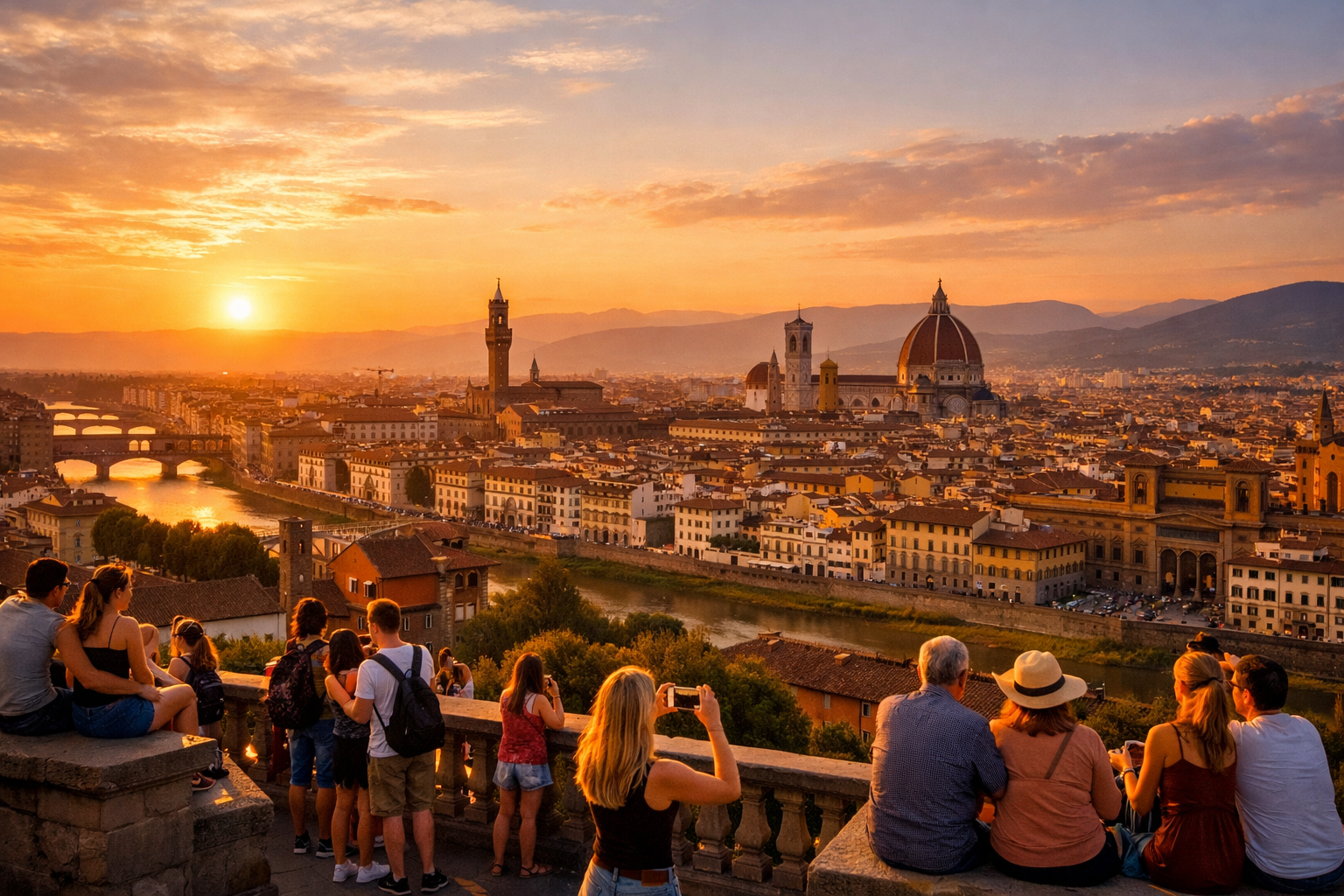
Florence rings in the new year with a public concert in Piazza della Signoria, followed by fireworks visible from Piazzale Michelangelo. The Arno riverbanks fill with locals watching the display. If you're in town, the view from a terrace overlooking the city is hard to beat.
Epiphany & La Befana — January 6
The Feast of the Epiphany is a national holiday. In Florence, the main event is the Cavalcata dei Re Magi (Procession of the Magi) — a Renaissance costume parade from Palazzo Pitti to the Duomo, featuring hundreds of participants in 15th-century dress, horses, flag-throwers, and drummers. Free to watch from the streets along the route.
La Befana is the Italian witch-like figure who brings children treats on Epiphany Eve. Markets and street stalls selling candy, toys, and stockings pop up around Piazza della Repubblica.
Pitti Immagine Uomo — Mid-January
Florence's biggest fashion trade fair at Fortezza da Basso (5 minutes from Via Guido Monaco). While the trade shows are industry-only, the streets fill with impeccably dressed fashion buyers and influencers. Great people-watching. The neighborhood restaurants fill up, so book dinner ahead.
What else: January is low season. Museums are uncrowded, hotel and apartment prices are at their lowest, and the city feels authentically local. Cold but manageable (3-10°C). Excellent for budget travelers.
February: Carnevale Season
Carnevale di Firenze — Early-to-mid February (dates vary)
Florence's Carnevale isn't Venice-level spectacle, but it has its own charm. The main celebration happens in Piazza Ognissanti and around Santa Maria Novella, with masked processions, street performances, and vendors selling cenci (fried carnival pastries dusted in powdered sugar — addictive).
Children's Carnevale in Piazza della Signoria features costume contests, puppet shows, and face painting. The whole city has a lighter, more playful energy for about two weeks.
Food to try: Cenci (also called chiacchiere) and schiacciata alla fiorentina — a flat, fluffy cake dusted with powdered sugar, found in every bakery during February.
What else: Still low season. Great time for museum visits with minimal queues. Start of the year's first warm spells (some days hit 14-15°C).
March: Spring Arrives
Annunciation Day — March 25
Florence's historical new year — March 25 was New Year's Day in Florence until 1749. A small but atmospheric ceremony takes place in Piazza Santissima Annunziata, where a traditional fair (Fiera dell'Annunziata) has been held since the 14th century. Stalls sell handmade goods, food, and seasonal products.
Taste Florence (Food Festival) — Mid-March
Annual food event at Fortezza da Basso (walking distance from the station) featuring Tuscan producers, olive oil tastings, wine, cheese, and cooking demonstrations. Entry €10-15. Good introduction to Tuscan food culture.
What else: Florence starts warming up (10-16°C). Cherry blossoms appear in Boboli Gardens. Tourist crowds are still manageable. Excellent time to visit.
April: Peak Spring, Easter Spectacle
Scoppio del Carro (Explosion of the Cart) — Easter Sunday
This is Florence's most unique event and one of Italy's most spectacular Easter traditions. Here's what happens:
A centuries-old oxcart loaded with fireworks is pulled through the city by white oxen in historical costume, arriving at the Piazza del Duomo. During Easter Mass in the cathedral, a dove-shaped rocket (the colombina) is launched along a wire from the high altar, through the cathedral doors, across the piazza, and into the cart — igniting the fireworks.
If the colombina successfully lights the cart, it's considered good luck for the year's harvest. The explosion lasts about 20 minutes, with fireworks launching in all directions from the cart while the crowd cheers.
How to see it: Arrive at Piazza del Duomo by 9:00am (the explosion happens around 11:00am). The piazza fills up fast. Alternatively, watch from a rooftop terrace or side street for a less crowded experience. From Via Guido Monaco, you can walk to the Duomo in 12 minutes — leave by 8:30am to secure a decent spot.
Easter Monday (Pasquetta): Florentines picnic in parks and the surrounding countryside. Join them in Boboli Gardens, the Cascine park, or take a bus to Fiesole.
Florence Marathon (if scheduled) — Late April
Check the official website for 2026 dates. The marathon route passes through the historic center and across the Arno — great for spectators. Streets along the route close temporarily.
What else: April is prime visiting season. Warm days (15-20°C), flowers everywhere, moderate crowds. Book accommodation and museums well ahead.
May: Cultural Season Opens
Maggio Musicale Fiorentino — May through June
Florence's premier classical music and opera festival, running since 1933. Performances at the Opera di Firenze (near Cascine park, 15 min walk from the station) and sometimes in historic venues throughout the city.
The festival features opera, symphonic concerts, ballet, and contemporary music. Tickets range from €20-150 depending on the performance and seating. The outdoor performances in particular are memorable.
How to book: Tickets go on sale months ahead at operadifirenze.it. Popular operas sell out fast.
Iris Garden (Giardino dell'Iris) — May only
A stunning iris garden below Piazzale Michelangelo, open only during May when the irises bloom. The iris is Florence's official symbol (the giglio, or lily, on the city crest is actually a stylized iris). Free entry. Combine with a sunset at Piazzale Michelangelo.
Rose Garden (Giardino delle Rose) — Peak bloom in May
Below Piazzale Michelangelo, this terraced garden has 350 varieties of roses plus a collection of contemporary sculptures. Free entry, lovely views, fewer tourists than Boboli. Best experienced in morning light.
What else: May is arguably the best month to visit Florence. Warm but not hot (18-25°C), long daylight, gardens in full bloom, restaurant terraces open, outdoor events everywhere.
June: Summer Spectacle
Calcio Storico — June 10-24
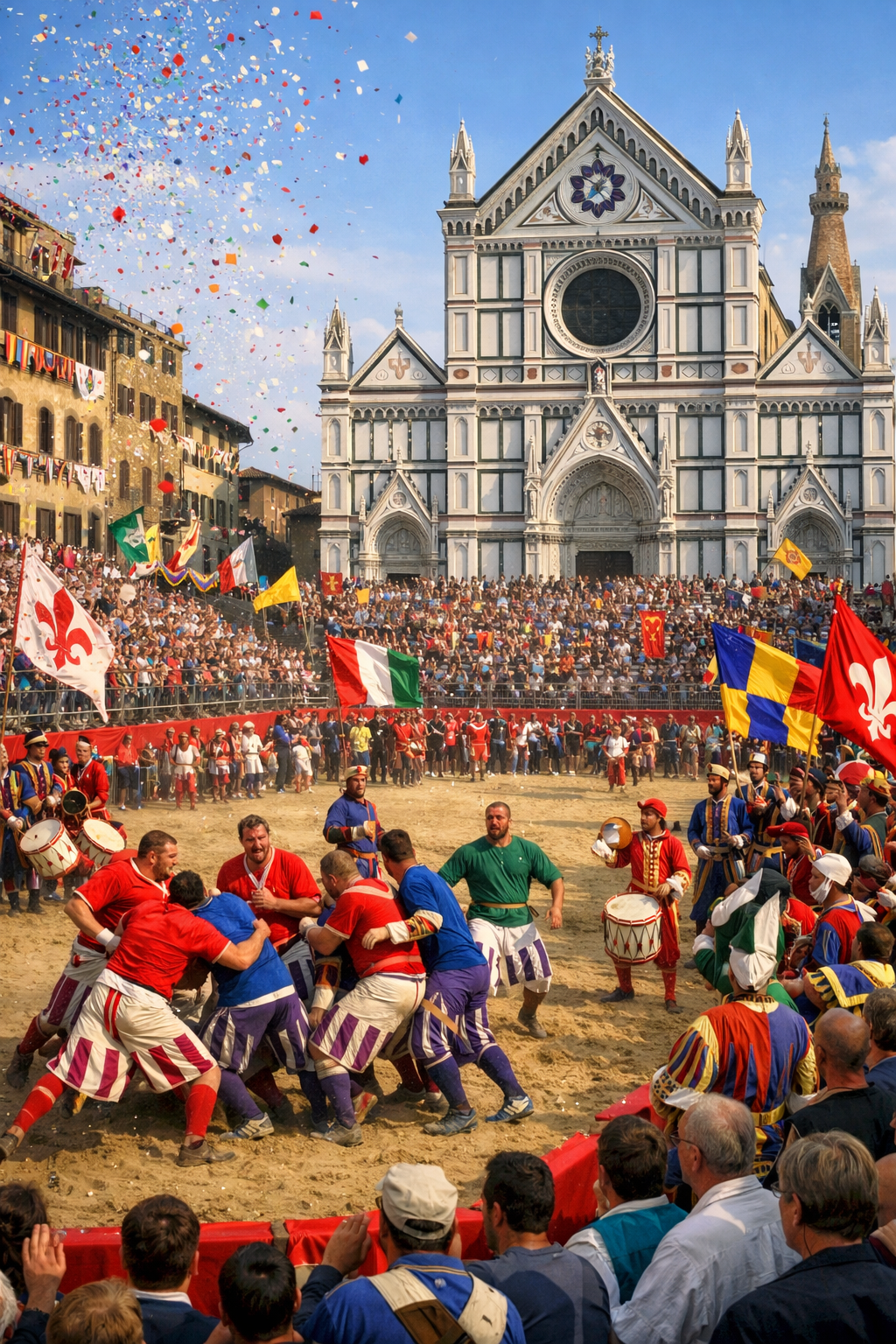
Florence's most intense, most Florentine event. Calcio Storico (Historic Football) is a brutal, medieval sport played in Renaissance costume in a sand-covered Piazza Santa Croce. Think rugby meets wrestling meets football, with 27 players per side and very few rules. It's been played since the 16th century.
Four historical neighborhoods (quartieri) compete: Santa Croce (blue), Santa Maria Novella (red), Santo Spirito (white), San Giovanni (green). The semi-finals happen on June 10 and 11, with the final on June 24 (the Feast of San Giovanni, Florence's patron saint).
How to see it: Tickets go on sale in May and sell out quickly. Check the city website (comune.fi.it). Prices range from €25-70. Even without tickets, the atmosphere around Piazza Santa Croce on match days is incredible — parades, drumming, flag-throwing, and locals passionately cheering their neighborhood.
June 24 — Feast of San Giovanni: Florence's biggest public holiday. Parades through the city, the Calcio Storico final, and spectacular fireworks over the Arno at 10pm. The fireworks are visible from any bridge, Piazzale Michelangelo, or (best of all) from a terrace overlooking the river. The whole city celebrates.
Estate Fiesolana — June through September
Fiesole's summer arts festival, held in the ancient Roman amphitheater overlooking Florence. Music, theater, film, and dance performances under the stars with a 2,000-year-old backdrop. Bus #7 from the station (20 minutes). Tickets €10-35.
Festa della Musica — June 21
International music day. Free concerts throughout Florence — in piazzas, church courtyards, parks, and even on the bridges. All genres from classical to jazz to electronic. Wander the city and let the music guide you.
What else: June is warm (25-32°C), days are very long, and the city buzzes with energy. Book accommodation well ahead — this is peak season.
July-August: Hot Summer, Outdoor Living
Florence Dance Festival — July
International contemporary dance festival at various venues across Florence, including outdoor performances in historic piazzas. The schedule varies yearly — check florencedancefestival.org.
Open-Air Cinema — July and August
Several outdoor cinema venues open for the summer:
- Cinema Chiardiluna (near Porta Romana) — Movies under the stars, often in original language with subtitles
- Arena di Marte — Larger venue, mix of Italian and international films
Ferragosto — August 15
National holiday. Many local businesses close for a week or two around this date. The city empties of Florentines and fills with international tourists. Some restaurants close; the ones that stay open often raise prices.
August tip: If you visit in August, accept the heat (35-40°C), plan museum visits for early morning, rest during afternoon heat, and come alive again in the evening. Air conditioning in your apartment is absolutely essential. The Guido Monaco apartment's AC makes August bearable — retreat to your terrace in the evening when temperatures drop.
What else: July-August is hottest, most expensive, and most crowded. But the long evenings, outdoor events, and summer energy have their own appeal. If you can handle the heat, it's a vibrant time.
September: The Sweet Spot Returns
Rificolona — September 7
One of Florence's most charming festivals. On the eve of the Nativity of the Virgin Mary, children (and adults) carry paper lanterns through the streets, converging on Piazza Santissima Annunziata. The tradition dates to the 12th century, when rural Florentines carried lanterns to the city for the festival.
Modern Rificolona lanterns are colorful paper creations on sticks. Kids carry them, adults shoot at them with cerbottane (blowguns — yes, really — it's tradition to try to pop other people's lanterns). The atmosphere is joyful and chaotic. A wonderful thing to stumble into.
Where to see it: Piazza Santissima Annunziata is the main gathering point. The procession routes vary but generally move through the historic center starting around 8pm.
European Heritage Days — Late September
Across Europe, heritage sites that are normally closed to the public open their doors for free. In Florence, this often includes private palazzi, gardens, and historic buildings that you can't visit any other time. Check local listings closer to the date.
What else: September is many travelers' favorite month. Summer crowds thin, temperatures drop to comfortable levels (20-28°C), and the city regains its local character. Excellent time for everything — sightseeing, eating, wine country day trips.
October: Wine Harvest and Autumn Colors
Grape Harvest Season — October
Chianti wine country comes alive in October. Many vineyards open for harvest festivals, tastings, and special events. This is the best time for a wine day trip from Florence.
How to experience it: Book a Chianti wine tour that includes a harvest-season vineyard visit. Or take the bus to Greve in Chianti (1 hour), the heart of Chianti Classico country, and visit the town's enoteca and surrounding wineries independently.
Festa dell'Olio Nuovo — Late October
The new olive oil season begins. Frantoios (olive oil mills) across Tuscany offer tastings of the year's first pressing — green, peppery, intensely flavored oil that's completely different from what you buy in supermarkets. Some tours from Florence combine olive oil and wine tastings.
Autumn at Boboli Gardens
October transforms Boboli Gardens with fall colors. Fewer tourists, golden light, and the kind of atmospheric beauty that made Florence famous in the first place.
What else: October is superb. Comfortable temperatures (14-22°C), autumn food menus (mushrooms, truffles, chestnuts, new wine), thin crowds, lower prices. Arguably the best value month.
November: Truffle Season and Pre-Holiday Quiet
Truffle Season — November
White truffle season peaks in November. Florence restaurants feature truffle menus — fresh truffle shaved over pasta, eggs, risotto. It's expensive (truffle dishes run €25-45) but it's a genuine seasonal experience you can't replicate elsewhere.
All Saints' Day — November 1
National holiday. Florentines visit family graves, cemeteries are decorated with flowers, and the city has a contemplative, quiet atmosphere. Some museums close.
Early Christmas Markets — Late November
Florence's Christmas season begins in late November, with markets opening in Piazza Santa Croce and around the city center. Wooden stalls sell handmade crafts, ornaments, regional food specialties, and mulled wine (vin brulé).
What else: November is off-season. Cool and sometimes rainy (8-15°C), but hotels are cheap, restaurants aren't crowded, and the city feels intimate.
December: Christmas Markets and Winter Magic
Weihnachtsmarkt (German Christmas Market) — December
Piazza Santa Croce hosts Florence's biggest Christmas market, with a strong German influence (reflecting Florence's international community). Wooden chalets, handmade gifts, bratwurst, stollen, and vin brulé alongside Italian panettone and torrone. Open daily from late November through December 20-ish.
Firenze Winter Park — December through February
An ice skating rink and winter entertainment area, usually at Parterre or another central location. Fun for families and a different side of Florence.
Christmas Eve and Christmas Day
Florence's churches hold midnight masses on Christmas Eve — the most atmospheric is at the Duomo, where the setting elevates the service into genuine spectacle. Christmas Day is quiet; most restaurants and shops close, but the city is beautiful and empty. Walk to the Arno at sunset on Christmas Day and you might have the bridges to yourself.
New Year's Eve (San Silvestro) — December 31
The city hosts a public concert and countdown in Piazza della Signoria, with fireworks at midnight visible from across the city. Restaurants offer cenone (New Year's Eve dinner) menus at fixed prices (€60-120 per person typically). Book well ahead for the good ones.
What else: December is cold (3-10°C) but festive. Hotel prices spike between Christmas and New Year but are low in early December. A great time for a long-weekend trip.
Planning Around Events: Practical Tips
Booking Ahead
Major events (Calcio Storico, Easter, New Year's, fashion weeks) fill accommodation fast. Book 2-3 months ahead for these periods.
Location Advantage
Staying near Santa Maria Novella station puts you within walking distance of most event venues:
- Piazza del Duomo (Scoppio del Carro): 12 min walk
- Piazza Santa Croce (Calcio Storico, Christmas market): 20 min walk
- Fortezza da Basso (fashion fairs, food festivals): 5 min walk
- Piazzale Michelangelo (fireworks viewing): 30 min walk or bus #12
- Opera di Firenze (Maggio Musicale): 15 min walk
Free vs. Ticketed
Most Florence festivals are free to attend. Exceptions: Calcio Storico (tickets required), Maggio Musicale concerts (ticketed), some food festivals (small entry fee). Check specific event websites for details.
Your Florence Base for Any Season
Whether you're timing your trip for Scoppio del Carro at Easter, Calcio Storico in June, or Christmas markets in December, having a well-located apartment near the station means you're always close to the action — and far enough from it to sleep well after the celebrations.
Check availability at Guido Monaco on Booking.com
Related Reading:
Book Your Florence Stay
Experience the comfort of Guido Monaco apartment — perfect location, modern amenities, and a private terrace.