Best Day Trips from Florence by Train (2026): Pisa, Siena, Cinque Terre & More
Florence is one of Italy's greatest cities — but it's also the perfect base for exploring Tuscany and beyond. Staying near Santa Maria Novella train station gives you a massive advantage: the entire region is at your doorstep. Step out of your apartment, walk two minutes to the platforms, and you can be in Pisa, Siena, Cinque Terre, or Lucca before lunch.
This guide covers the best day trips from Florence by train — with travel times, what to see, and practical tips for each destination.
Why Florence is the Perfect Base for Day Trips
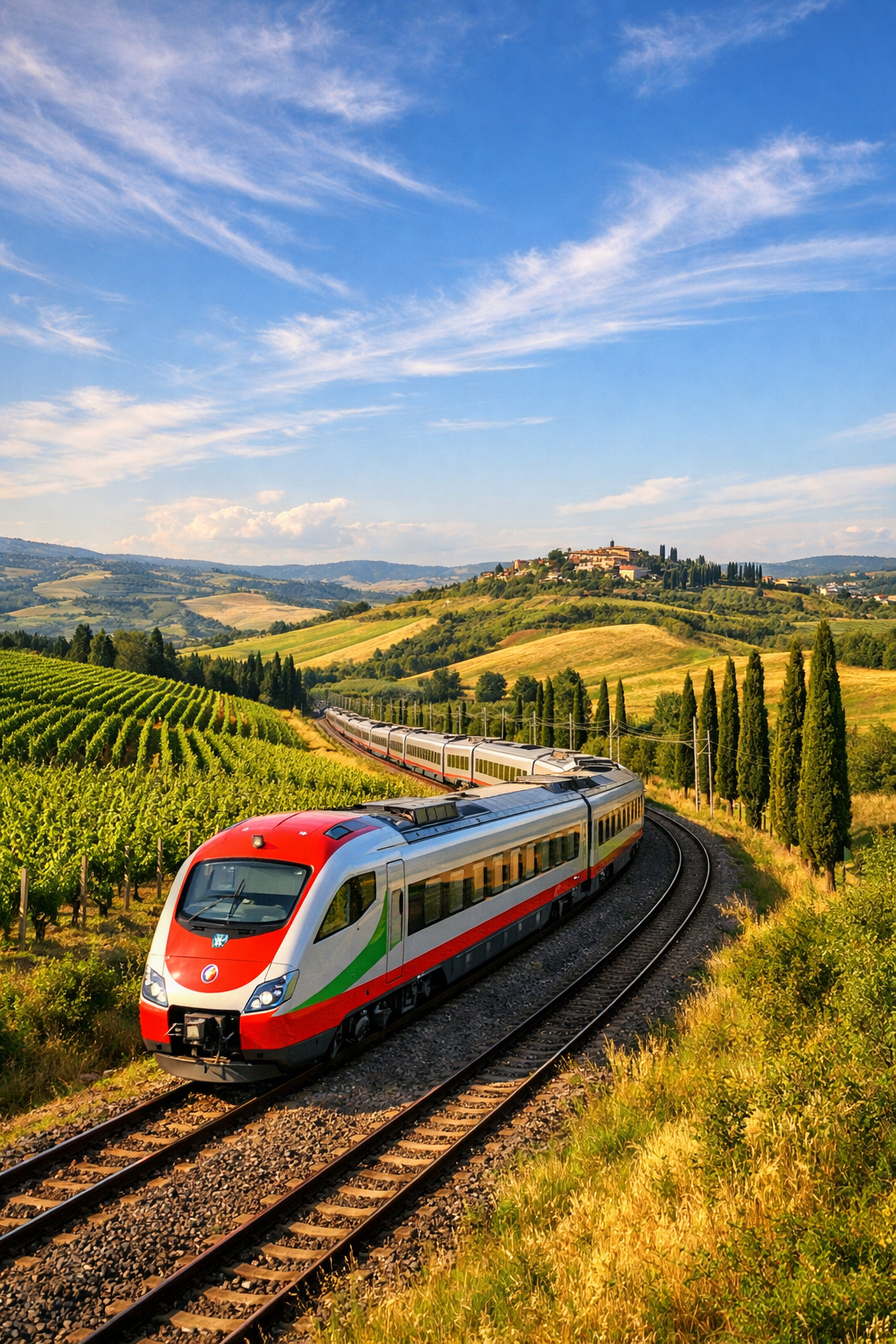
Santa Maria Novella is one of Italy's best-connected train hubs. Frequent Trenitalia and Italo services connect to dozens of destinations, including high-speed trains to Rome, Venice, and Milan. But the regional network is equally impressive — Tuscany's most beautiful towns are within 30–90 minutes.
Key advantages of staying near SMN station:
- Zero taxi/transfer costs — walk directly to platforms
- Early departures are painless (no long commute to the station)
- Come back late without worrying about last trains
- Store luggage at the station on your last day for a bonus half-day trip
1. Pisa — 1 Hour by Train
Best for: Iconic architecture, student energy, underrated old town
Everyone knows the Leaning Tower. Few people know that Pisa is also a genuinely charming university city with a beautiful waterfront, excellent food, and almost zero tourist traps once you leave the Campo dei Miracoli.
What to see:
- Piazza dei Miracoli (Campo dei Miracoli): The Leaning Tower, Duomo, Baptistery, and Camposanto — buy a combo ticket to save money. Budget 2–3 hours.
- Lungarni (riverside promenade): The Arno River looks different here than in Florence — wider, quieter, lined with colorful palazzi. Perfect for an afternoon stroll.
- Borgo Stretto: The main shopping street, full of arcaded walkways and local bars. Grab a cecina (chickpea flatbread) — a Pisa specialty.
- Piazza dei Cavalieri: The city's historic political center, now dominated by the prestigious Scuola Normale Superiore. Beautiful and crowd-free.
Train details:
- Frequency: Every 30–60 minutes (regional Trenitalia)
- Duration: 50–75 minutes
- Cost: €9–12 one way
- Station: Pisa Centrale (15-minute walk or bus to Campo dei Miracoli)
Insider tip: Arrive early (before 9am) to beat the crowds at the Leaning Tower. The queues for the tower climb get brutal by 11am.
2. Siena — 1.5 Hours by Train or Bus
Best for: Medieval atmosphere, Palio horse race, rival of Florence
Siena is Florence's eternal rival — and some argue it's more beautiful. The city hasn't changed much since the 14th century. Walking into Piazza del Campo for the first time is one of Italy's genuinely jaw-dropping moments.
What to see:
- Piazza del Campo: The scallop-shaped main square, one of Europe's finest. Sit on the bricks, order a coffee from a café, and watch the world go by. Every July 2 and August 16, the famous Palio horse race circles this square.
- Siena Cathedral (Duomo): Arguably more ornate than Florence's, with an extraordinary inlaid marble floor. Don't miss the Piccolomini Library inside.
- Palazzo Pubblico and Torre del Mangia: Climb the tower for panoramic views of the surrounding countryside.
- Contrade neighborhoods: Siena is divided into 17 rival districts (contrade). Each has its own museum, church, and intense civic pride. Wander into whichever neighborhood you stumble into.
Train details:
- Train: 1h 40min, change at Empoli. Roughly hourly. €11–15 one way.
- Bus (Tiemme/FlixBus): 1h 15min direct from Florence bus station (near SMN). Often faster and cheaper — check Flixbus.it.
Insider tip: Book Duomo tickets online — the cathedral complex sells out on busy days. The Opera della Metropolitana pass includes access to several buildings.
3. Cinque Terre — 2 to 2.5 Hours by Train
Best for: Dramatic coastal villages, hiking, seafood
Cinque Terre ("Five Lands") is a string of five colorful fishing villages clinging to steep cliffs above the Ligurian Sea. It's Instagram-famous but completely worth it — if you go early and avoid peak July/August weekends.
The five villages (north to south):
- Monterosso al Mare — the largest, with a real beach
- Vernazza — considered the most beautiful, with a natural harbor
- Corniglia — perched on a cliff, only reachable by 377 steps (or bus)
- Manarola — smaller, intensely colorful, great for sunset
- Riomaggiore — the southernmost, often used as a base
How to structure your day: Take the early morning train to Monterosso, then work your way south by a combination of hiking and local trains. The Cinque Terre Express runs frequently between all five villages. Buy a Cinque Terre Card (€18.50) for unlimited train access between the villages and trail access.
Train details:
- Florence SMN → La Spezia: 2–2.5 hours (change at Pisa or direct fast train)
- La Spezia → Cinque Terre villages: 5–20 minutes each
- Cost: €25–35 return (Florence to La Spezia), Cinque Terre Card separate
Insider tip: Start in Monterosso and end in Manarola for the most photogenic sunset. Book dinner in Vernazza well in advance — restaurants fill up fast.
4. Lucca — 1.5 Hours by Train
Best for: Intact Renaissance walls, cycling, relaxed pace
Lucca is the antidote to Florence's crowds. This small walled city feels like a secret — barely touched by mass tourism, with excellent restaurants, beautiful piazzas, and the unique experience of cycling on top of its medieval walls.
What to see:
- The Walls (Mura di Lucca): 4km of Renaissance fortifications, now a tree-lined promenade on top. Rent a bike at the station (€3–5/hour) and cycle the whole circuit.
- Piazza dell'Anfiteatro: Built on the ruins of a Roman amphitheatre, the oval-shaped piazza retains the exact footprint of the ancient structure. Ringed with cafés and restaurants.
- San Frediano and San Michele: Two of Lucca's finest Romanesque churches, with gorgeous façades. Free to enter.
- Torre Guinigi: A medieval tower with a live oak tree growing from the top. Climb for views over the city.
- Via Fillungo: The main shopping street, lined with Art Nouveau shopfronts and historic cafés.
Train details:
- Frequency: Hourly (regional)
- Duration: 1h 20min–1h 40min
- Cost: €8–12 return
- Station: Lucca Centrale (5-minute walk to city walls)
Insider tip: Lucca is famously the birthplace of Giacomo Puccini. The Puccini Museum in his childhood home is small but excellent if you're an opera fan.
5. San Gimignano — 1.5 Hours (Bus + Train)
Best for: Medieval towers, Vernaccia wine, dramatic skyline
San Gimignano is one of Tuscany's most distinctive towns — a medieval skyscraper city of 14 surviving towers that once numbered 72. It's a UNESCO World Heritage Site and genuinely stunning, especially arriving on the bus and seeing the towers rise above the hills.
What to see:
- Piazza della Cisterna: The main square, paved with herringbone bricks and centered on an ancient well. Surrounded by towers and medieval palaces.
- Torre Grossa: Climb the tallest surviving tower for panoramic Tuscan countryside views.
- Vernaccia di San Gimignano: The local white wine — Italy's first DOC wine. Try it at one of the enotecas in town, or book a tasting at a nearby vineyard.
- Collegiate Church (Duomo): Spectacular 12th-century frescoes covering every wall and ceiling. Often overlooked by visitors who don't pay the entrance fee — don't make that mistake.
How to get there:
- Train from Florence to Poggibonsi-San Gimignano station (1h 10min, ~€7)
- Bus 130 from Poggibonsi station to San Gimignano (25 min, €2.50)
- Total door-to-door: ~1.5 hours
Insider tip: San Gimignano gets overwhelmed with tour buses from about 10am. Arrive early, or better, go on a weekday. By late afternoon, the crowds thin and the light on the towers turns golden.
6. Bologna — 35 Minutes by High-Speed Train
Best for: World-class food, portico walkways, medieval university city
Bologna often surprises first-time visitors. The city has arguably the best food culture in Italy (Emilia-Romagna is the home of mortadella, tortellini, Parmigiano-Reggiano, and Prosciutto di Parma), a magnificent historic center, and an energy that's very different from Florence — more local, less polished, endlessly interesting.
What to see:
- Piazza Maggiore: The grand central square, dominated by the unfinished façade of San Petronio Basilica (deliberately unfinished — the Pope stopped the money). Sit at Gran Caffè Commercianti for the best view.
- Due Torri (Two Towers): Two leaning medieval towers in the center of the city. Climb Torre degli Asinelli (498 steps) for rooftop views.
- Mercato di Mezzo and Quadrilatero: The covered market and surrounding medieval streets, packed with food vendors. Buy fresh pasta, cured meats, aged cheeses, and local wines.
- Porticoes of Bologna: 38km of covered walkways — a UNESCO-listed architectural marvel. Walk to the Sanctuary of San Luca via the world's longest portico (3.8km, 666 arches).
Train details:
- Frequency: Every 30 minutes (Frecciarossa high-speed)
- Duration: 35–40 minutes
- Cost: €15–25 one way (worth it for the speed)
Insider tip: Book a pasta-making class in the morning, explore the city in the afternoon. Tagliatelle al ragù in Bologna tastes nothing like any Bolognese you've had elsewhere.
7. Volterra — 2 Hours (Train + Bus)
Best for: Etruscan history, alabaster crafts, dramatic hilltop setting
Volterra is a less-visited but extraordinary hilltop town, perched on a plateau above the Cecina valley at 540 meters. It predates Florence by centuries — an important Etruscan city before the Romans arrived. The views from the walls over the surrounding countryside are some of Tuscany's best.
What to see:
- Museo Etrusco Guarnacci: One of Italy's best Etruscan museums, with hundreds of funerary urns and the famous L'Ombra della Sera elongated bronze figure.
- Roman Theatre: Well-preserved 1st-century BC theatre on the edge of town, viewable from above for free.
- Alabaster workshops: Volterra has been carving alabaster for 2,500 years. Many family workshops still operate in the historic center — you can watch artisans at work.
- Fortezza Medicea: The Medici fortress, now a prison (not open to tourists, but impressive from outside).
How to get there:
- Florence → Saline di Volterra by train (1h 30min)
- Bus from Saline to Volterra (30 min)
- Or: Florence → Colle di Val d'Elsa by bus, then bus to Volterra
Practical Tips for All Day Trips
Buy Tickets in Advance
For regional trains, tickets are cheap and often not needed in advance. For high-speed trains (Bologna, Cinque Terre), book at least a few days ahead on trenitalia.com or italotreno.it for the best prices.
Validate Your Ticket
Regional train tickets must be validated in the yellow machines on the platform before boarding. Forget this and you risk a €50+ fine regardless of having a valid ticket.
The Trenitalia App
Download it before you leave. You can buy tickets, see live departures, and get platform information without queuing at ticket machines.
Start Early
Most destinations get crowded mid-morning. A 7–8am departure means you arrive before the tour buses and have the best light for photography.
Why Staying Near Florence Train Station Makes Everything Easier
Planning any of these trips becomes significantly easier when your accommodation is two minutes from Santa Maria Novella station. You wake up, grab a coffee, and you're on the train before most tourists have checked into their hotels.
At Guido Monaco apartment on Via Guido Monaco, the station is a 2-minute walk. There's no taxi to book, no bus connection to stress about. Late returns are relaxed — you walk back from the platform to your front door.
Whether you're planning one day trip or five, having a well-located Florence base multiplies the value of every day you're in Tuscany.
Frequently Asked Questions
What is the easiest day trip from Florence by train? Pisa is the easiest — trains run every 30–60 minutes, take under 75 minutes, and the Leaning Tower is walking distance from the station via a flat route or short bus. No advance booking needed.
Can you do Cinque Terre as a day trip from Florence? Yes, but it's a full day. Take the 7–8am train to get there by 10am, giving you 6–7 hours before your return train. The Cinque Terre Express connects all five villages in minutes, making it manageable in a day.
Which is better for a day trip from Florence — Siena or Lucca? Both are excellent. Siena is more dramatic and historically significant; Lucca is more relaxed and better for cycling. Siena is the better choice if you're interested in medieval art and architecture. Lucca wins if you want to slow down and enjoy good food without crowds.
How do I get from Florence to Cinque Terre? Take Trenitalia from Florence SMN to La Spezia Centrale (direct or via Pisa). Journey time is 2–2.5 hours. From La Spezia, the Cinque Terre Express connects all five villages. Buy a Cinque Terre Card at La Spezia station.
Is Bologna worth a day trip from Florence? Absolutely — and it's the quickest trip on this list (35 minutes by high-speed train). Bologna is an underrated destination: extraordinary food, beautiful medieval architecture, and far fewer tourists than Florence. Go hungry.
What's the best day trip from Florence for families with kids? Pisa works well for kids — the Leaning Tower is genuinely fun, the space is open, and children under 8 cannot climb the tower anyway (saves the queue). Lucca with its cycling on the walls is also excellent for families.
Book Your Florence Stay
Experience the comfort of Guido Monaco apartment — perfect location, modern amenities, and a private terrace.