Best Coffee & Pastry Shops Near Florence Train Station: A Breakfast Guide for Travelers
There's a moment every visitor to Florence eventually experiences: you step off the train at Santa Maria Novella, roll your luggage onto the sunlit piazza, and feel that particular brand of Italian hunger — not for a full meal, but for a tiny, perfect cup of espresso and something warm from a glass case. The problem is, you don't know where to go. Touristy bars with €4 cappuccinos lurk near the station entrance, waiting for exactly this kind of jetlagged vulnerability.
This guide is here to save you from that fate.
After years of morning walks through the Santa Maria Novella neighbourhood, we've mapped out the best coffee bars and pasticcerie (pastry shops) within easy reach of the station. These are the places where locals actually go — before work, between errands, on lazy Sunday mornings. Most are within a 5–10 minute walk from the train, and all of them serve the kind of coffee and pastry that reminds you why Italian breakfast culture is legendary.
If you're staying near the station — for example at Guido Monaco apartment on Via Guido Monaco, which is about a 5-minute walk from Santa Maria Novella — you'll have these gems practically on your doorstep.
Why Italian Coffee Culture Is Different (And Why It Matters)
Before we dive into specific spots, it helps to understand what you're stepping into. Italian breakfast is not a sit-down affair. It's a ritual — quick, precise, and deeply social.
Here's what's different:
- You stand at the bar. Most Italians drink their espresso standing at the counter. It's faster, it costs less (bar vs. table pricing is a real thing), and it's the authentic way.
- Cappuccino is a morning drink only. Ordering a cappuccino after 11 AM will not get you arrested, but it will earn a subtle look.
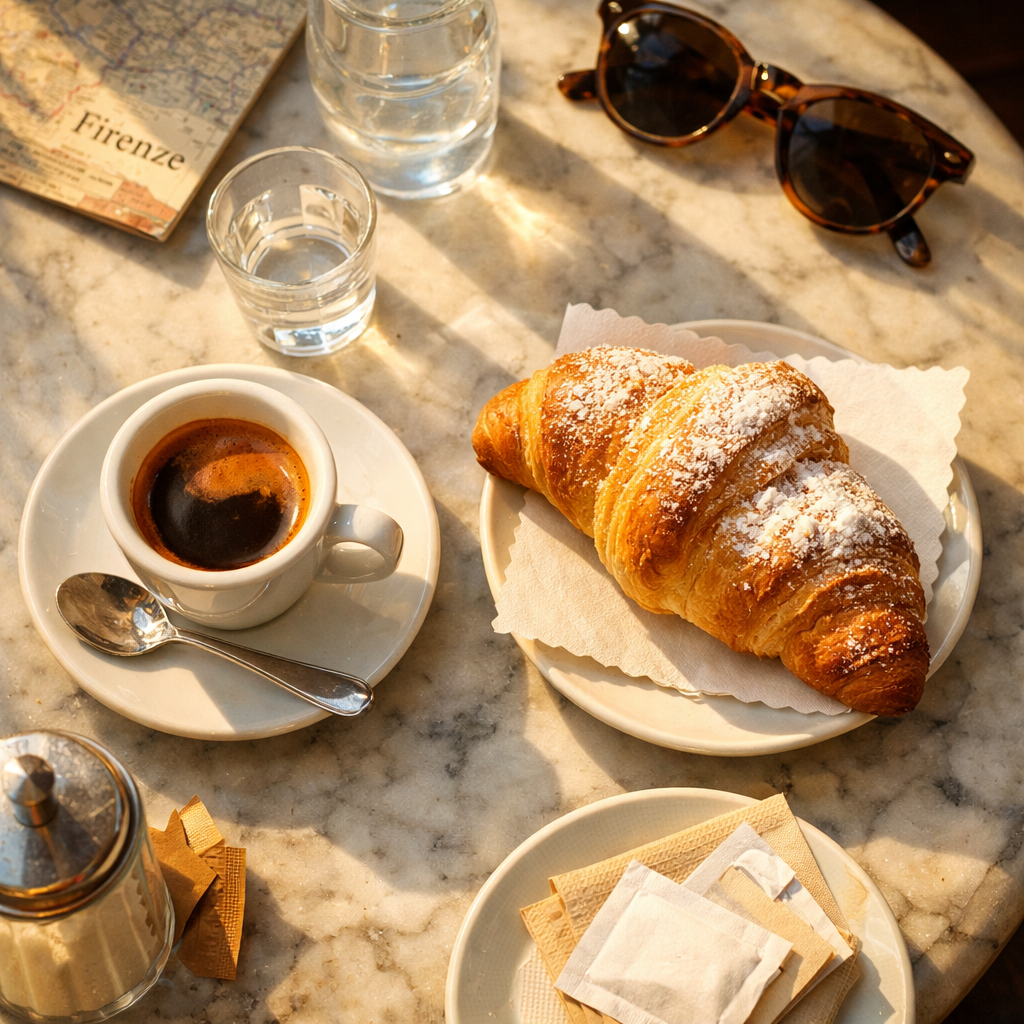
- The cornetto is king. Forget croissants — the Italian cornetto is lighter, softer, slightly sweet, and comes filled with crema (custard), cioccolato (chocolate), or marmellata (jam). Plain (vuoto / lisso) is also perfect.
- Coffee is cheap. A perfectly made espresso at the bar should cost €1.10–€1.50. If it's €3, move on.
- Freshness is everything. Pastries are made in-house or delivered fresh each morning. Go early (7:00–9:30 AM) for the best selection.
Now, let's find you breakfast.
The Best Coffee & Pastry Spots Near Florence Train Station
1. Caffè Gilli (5 min walk)
Address: Piazza della Repubblica, 39/r
Hours: Daily 7:30 AM – 11:00 PM
Gilli is one of Florence's oldest and most beautiful cafes, opened in 1733. It sits on Piazza della Repubblica, a 5-minute walk from Santa Maria Novella, and while it's popular with tourists, it remains a legitimate institution that locals visit for special occasions.
The Art Nouveau interior is stunning — gilded mirrors, velvet seats, ornate pastry cases. But you don't need to sit inside to enjoy it. Standing at the bar for an espresso and a pastry costs a fraction of the table price and lets you experience Gilli the way Florentines do.
Order: Espresso or macchiato at the bar + a cornetto alla crema or one of their signature torte mignon (mini cakes).
Tip: Go early on weekdays when the crowd is mostly locals grabbing a quick coffee before work. Avoid the weekend tourist rush unless you want the full sit-down experience.
2. Serafini (3 min walk)
Address: Piazza Santa Maria Novella, 19/r
Hours: Mon–Sat 7:30 AM – 8:00 PM
Serafini is your local bar in the best possible sense. It sits right on Piazza Santa Maria Novella, practically at the exit of the station, but somehow avoids the tourist trap pricing. The espresso here is classic Florentine — strong, slightly bitter, perfectly extracted — and the pastry selection is reliable and fresh each morning.
This is the kind of place where taxi drivers, shopkeepers, and hotel staff stop on their way to work. You'll hear Italian, not English, at the bar most mornings, which is always a good sign.
Order: Cappuccino e cornetto al cioccolato. Simple, perfect, €3 total.
Tip: The bar service is fast. Don't linger or expect leisurely conversation — order, enjoy, and let the next person in. It's the Florentine way.
3. Il Latini Café (7 min walk)
Address: Via dei Palchetti, 6/r
Hours: Mon–Sat 7:00 AM – 3:00 PM
Not to be confused with the famous Il Latini trattoria next door, this small bar and café is a neighbourhood institution for the Santa Maria Novella crowd. The pastries here are made by a nearby pasticceria and arrive fresh in the morning — the sfoglia (puff pastry) selections and cream-filled pastries are particularly good.
The coffee is reliably excellent, the prices are local, and the atmosphere is unhurried even during the morning rush.
Order: Caffè americano if you need a large coffee, or the classic espresso doppio if you need the hit. Pair with a sfogliatella or brioche ripiena.
4. Pasticceria Buonamici (8 min walk)
Address: Via dei Fossi, 8/r
Hours: Tue–Sun 7:30 AM – 7:30 PM
Via dei Fossi is a quiet street of antique shops and artisan studios between Santa Maria Novella and the Arno river. Tucked among them is Buonamici — a proper Florentine pasticceria that has been making cakes, biscotti, and pastries for decades.
This is not primarily a coffee bar — it's a pastry shop that happens to serve excellent coffee. The display cases are works of art: layers of fruit tarts, mignon pastries, crostata, and biscotti secchi (dry cookies for dunking). Morning pastries are lighter than the elaborate afternoon cakes, and that's exactly what you want for breakfast.
Order: Espresso at the bar with a pasta sfoglia (puff pastry) or a simple crostatina di marmellata (small jam tart).
Tip: If you're looking for something to bring back to your apartment for a lazy morning, buy a box of mixed pastries — they package beautifully and taste even better with a Moka pot coffee at home.
5. Caffè Amerini (10 min walk toward the Duomo)
Address: Via della Vigna Nuova, 63/r
Hours: Mon–Sat 8:00 AM – 7:00 PM
Caffè Amerini is a Florentine institution that doesn't get enough attention from visitors. It's a wine bar, lunch spot, and breakfast bar rolled into one, with a beautiful interior of wooden shelves stacked with bottles and an old-fashioned counter where the coffee is made properly.
In the morning, it draws professionals from the nearby boutiques and offices along Via della Vigna Nuova and Via Tornabuoni (Florence's luxury shopping street). The pastry selection skews more towards savory in the morning — think small tramezzini (soft sandwiches) alongside the sweet options — which makes it a great choice if you want something more substantial than a cornetto.
Order: Caffè macchiato + a small brioche or one of the savory morning bites.
6. Il Latini da Asporto / Forno Sartoni (5 min walk)
Address: Via dei Cerretani, 34/r
Hours: Mon–Sat 7:30 AM – 7:30 PM
Not a coffee bar, but if you want fresh Florentine bread and schiacciata (Tuscan flatbread) as part of your breakfast routine, Forno Sartoni is one of the best bakeries near the station. The smell alone is worth the detour. They open early and their schiacciata — olive-oil-drenched, crispy on the edges, soft in the middle — is one of the best things you'll eat in Florence.
Order: A slice of schiacciata semplice (plain) or schiacciata all'olio, warm from the oven. Grab a coffee from the bar next door and you have the perfect Florentine street breakfast.
7. Caffe Borghese (6 min walk)
Address: Via dei Fossi, 52/r
Hours: Mon–Sat 7:00 AM – 6:00 PM
A calm, unassuming bar on Via dei Fossi that serves some of the most consistent espresso in the neighbourhood. No frills, no fancy décor — just a good coffee machine, a glass case of fresh pastries, and staff who've been making coffee since before you woke up.
This is the kind of place that doesn't appear in tourist guides, which means it's usually quiet even when the city around it is busy. If you're staying at Guido Monaco apartment and want a low-key morning ritual before hitting the sights, Caffe Borghese fits perfectly.
Order: Ristretto if you want the strongest, most concentrated shot. Cornetto vuoto (plain) — let the pastry speak for itself.
A Guide to Italian Coffee: What to Order
Navigating an Italian coffee menu can be confusing if you're used to a Starbucks-style approach. Here's your cheat sheet:
The Classics
- Espresso — The foundation of Italian coffee. A small, concentrated shot. Order "un caffè" and this is what you'll get.
- Caffè macchiato — Espresso "stained" with a small amount of steamed milk foam. Slightly softer than straight espresso.
- Cappuccino — Equal parts espresso, steamed milk, and foam. Perfect for breakfast, unusual after 11 AM.
- Caffè latte — More milk than cappuccino, less foam. A gentle morning option.
- Caffè americano — Espresso diluted with hot water. Similar to filter coffee in size but different in flavour.
- Marocchino — A Piemontese invention now popular throughout Italy: espresso, cocoa powder, and milk foam in a small glass. A delicious indulgence.
- Caffè corretto — Espresso "corrected" with a splash of grappa or sambuca. For mornings when you need it.
Less Common but Worth Knowing
- Ristretto — Even shorter than an espresso, more concentrated. Intense, slightly sweeter due to shorter extraction.
- Lungo — Longer extraction, more water. A bigger coffee, but different from an americano.
- Shakerato — Cold shaken espresso, served in summer. Wonderful on a hot Florence morning.
The Pastry Vocabulary: What's in the Glass Case
Walking up to an Italian pastry counter without knowing the names can lead to random pointing. Here's what you'll typically see:
- Cornetto — The Italian cousin of the croissant. Softer, slightly sweet, usually filled with crema, cioccolato, or marmellata. A plain cornetto (vuoto) is also excellent.
- Sfoglia — Flaky puff pastry, often filled with cream or jam. Lighter than a cornetto.
- Bomba / Krapfen — A filled doughnut, dusted with powdered sugar. Heavier, best on cold mornings.
- Brioche — In Tuscany, a soft, slightly eggy roll, often used as the base for cream-filled pastries.
- Crostata — A tart, usually with jam or cream filling. More of a mid-morning snack than a breakfast pastry, but delicious.
- Schiacciata — Flat Tuscan bread with olive oil and salt. The savory breakfast option.
- Biscotti — Hard twice-baked cookies, typically enjoyed dunked in espresso or latte. A classic Tuscan morning ritual.
The Bar Etiquette: How to Order Like a Local
First-time visitors sometimes feel intimidated at Italian coffee bars. Don't be. The process is simple once you know it:
Step 1: Look at the board behind the bar
Prices are listed. This tells you what things cost (and whether it's a local place or a tourist bar — prices above €2 for a plain cappuccino are a warning sign).
Step 2: Decide whether to pay first or after
In many busy bars, especially in Florence, you pay at the cassa (register) first, get a receipt (scontrino), and hand it to the barista. In smaller or quieter bars, you often order and pay at the end. When in doubt, watch what others do.
Step 3: Say your order clearly
- "Un caffè, per favore" — one espresso please
- "Un cappuccino e un cornetto alla crema" — cappuccino and a cream cornetto
- No need to say "small" or "regular" — in Italy, everything is sized appropriately by default.
Step 4: Stand at the bar (or ask to sit)
Standing at the bar (al banco) is cheaper and faster. If you want to sit at a table (especially an outside table), expect to pay more — sometimes significantly more. Both options are fine; just know what you're choosing.
Step 5: Leave a small tip if you liked it
Tipping is not obligatory in Italy, but leaving €0.10–€0.20 in the saucer is appreciated, especially if you become a regular.
Morning Walk: Guido Monaco to Coffee in 5 Minutes
If you're staying at Guido Monaco apartment on Via Guido Monaco, here's a simple morning coffee walk to start the day:
- Leave the apartment and turn toward the station (30 seconds)
- Cross Piazza Santa Maria Novella — beautiful at any time of morning, golden light before 9 AM
- Stop at Serafini (on the piazza) for the quick, local experience — or
- Walk 5 more minutes toward Piazza Repubblica for Caffè Gilli if you want the grand café experience
- Return via Via dei Cerretani — pick up fresh schiacciata from Forno Sartoni for later
Total time: 20–30 minutes. Total cost: under €5. Quality: priceless.
The location of Guido Monaco apartment near Santa Maria Novella means you have all of this within a short, pleasant morning walk. It's one of the underrated joys of staying in this neighbourhood — a proper Florentine breakfast is never more than 10 minutes away.
Best Coffee Shops by Category
Best Classic Espresso Bar (Local Vibe)
Serafini — Piazza Santa Maria Novella. The go-to for a quick, authentic standing espresso before exploring the city.
Best Historic Café (Special Occasion)
Caffè Gilli — Piazza della Repubblica. When you want the full Florentine café experience with the Art Nouveau interior.
Best Pastry Selection
Pasticceria Buonamici — Via dei Fossi. Serious pasticceria with a wide range of cakes and pastries, not just cornetti.
Best for a Quiet Morning
Caffe Borghese — Via dei Fossi. Unhurried, unpretentious, reliably good coffee.
Best for Fresh Bread + Coffee Combo
Forno Sartoni — Via dei Cerretani. Fresh schiacciata from the oven + a coffee from the bar next door.
Best for a Savory Breakfast
Caffè Amerini — Via della Vigna Nuova. Wine bar aesthetic, light savory bites alongside the usual pastries.
FAQs: Coffee and Breakfast in Florence
How much should I expect to pay for coffee in Florence?
A standard espresso at the bar should cost €1.10–€1.50 in a local bar. A cappuccino runs €1.40–€1.80. If you're paying more than €2 for a plain espresso, you're in a tourist-oriented spot. Near Santa Maria Novella station, prices vary — stick to bars on side streets or those used by local commuters for the best value.
What is a typical Italian breakfast?
Italian breakfast (colazione) is small and sweet. The classic combination is a cappuccino and a cornetto. It's typically consumed standing at a bar, takes about 5 minutes, and costs €2–€3. It's not meant to be a hearty meal — lunch is the bigger event. If you need more sustenance, add a second pastry or look for a bar that serves small sandwiches (tramezzini) in the morning.
Is it rude to ask for oat milk or alternatives in Italian coffee bars?
Most traditional Italian bars do not stock oat milk or alternatives. In central Florence, some cafes have started offering them due to tourist demand, but don't count on it. If you need a dairy-free option, look for a più modern café or specialty coffee bar, which are increasingly available but less common near the train station than in areas like San Frediano or Oltrarno.
What time do Italians have breakfast?
Most Italians eat breakfast between 7:00 and 9:30 AM. By 10:30 AM, many bars have shifted their focus to pre-lunch snacks (aperitivo starts early in Tuscany). If you want the freshest pastries and the most authentic bar atmosphere, go between 7:30 and 9:00 AM on weekdays.
Can I take pastries back to my apartment?
Absolutely — and it's a wonderful idea. Most bars and pasticcerie will box pastries for takeaway. If you're staying at an apartment like Guido Monaco (which has a fully equipped kitchen), buying a few pastries and making coffee in your own kitchen is a lovely, affordable way to start a day in Florence. Many local pasticcerie also sell biscotti and packaged sweets that make great gifts or travel snacks.
Final Thoughts: Wake Up in Florence, the Right Way
Florence rewards slow, attentive mornings. Before the tour groups descend on the Uffizi, before the queues form at the Accademia, the city belongs to the people who live there — and for one cappuccino-and-cornetto moment, it can belong to you too.
The Santa Maria Novella neighbourhood is one of the best places in Florence to experience this. It's not the photogenic chaos of the Duomo area or the studenty cool of San Frediano — it's a working Florentine neighbourhood with proper local bars, good bakeries, and the hum of daily life happening around you.
Staying at Guido Monaco apartment, just 5 minutes from the station, puts you right in the middle of it. You can spend your mornings doing what Florentines do: standing at the bar, drinking good coffee, eating something flaky and delicious, and watching the city wake up.
That's the real Florence — and it starts with breakfast.
Looking for accommodation near Santa Maria Novella? Guido Monaco apartment on Via Guido Monaco is a 55 m² apartment just a 5-minute walk from the station, with a private terrace, full kitchen, and easy access to everything in this guide. Check availability on Booking.com.
FAQ Schema Markup
{
  "@context": "https://schema.org",
  "@type": "FAQPage",
  "mainEntity": [
    {
      "@type": "Question",
      "name": "How much should I expect to pay for coffee in Florence?",
      "acceptedAnswer": {
        "@type": "Answer",
        "text": "A standard espresso at the bar should cost €1.10–€1.50 in a local bar near Santa Maria Novella station. A cappuccino runs €1.40–€1.80. If you're paying more than €2 for a plain espresso, you're in a tourist-oriented spot. Stick to bars on side streets or those used by local commuters for the best value."
      }
    },
    {
      "@type": "Question",
      "name": "What is a typical Italian breakfast?",
      "acceptedAnswer": {
        "@type": "Answer",
        "text": "Italian breakfast (colazione) is small and sweet. The classic combination is a cappuccino and a cornetto (a soft, sweet pastry similar to a croissant). It's typically consumed standing at a bar, takes about 5 minutes, and costs €2–€3. Italians don't eat large breakfasts — lunch is the bigger meal of the day."
      }
    },
    {
      "@type": "Question",
      "name": "What time do Italians have breakfast?",
      "acceptedAnswer": {
        "@type": "Answer",
        "text": "Most Italians eat breakfast between 7:00 and 9:30 AM. For the freshest pastries and most authentic bar atmosphere near Florence train station, go between 7:30 and 9:00 AM on weekdays. By 10:30 AM, many bars shift focus away from morning pastries."
      }
    },
    {
      "@type": "Question",
      "name": "Is it rude to ask for oat milk in Italian coffee bars?",
      "acceptedAnswer": {
        "@type": "Answer",
        "text": "Most traditional Italian bars near Santa Maria Novella station do not stock oat milk or dairy alternatives. Some modern cafes in Florence have started offering them due to tourist demand, but don't count on it in classic neighbourhood bars. For dairy-free coffee, look for specialty coffee shops or newer cafes in areas like Oltrarno."
      }
    },
    {
      "@type": "Question",
      "name": "Can I take pastries back to my Florence apartment?",
      "acceptedAnswer": {
        "@type": "Answer",
        "text": "Yes — and it's a great idea. Most bars and pasticcerie in Florence will box pastries for takeaway. If you're staying in an apartment near the train station with a kitchen, buying fresh pastries from a local bar and making coffee at home is an affordable and authentic way to experience Italian breakfast culture."
      }
    }
  ]
}
Book Your Florence Stay
Experience the comfort of Guido Monaco apartment — perfect location, modern amenities, and a private terrace.