Florence Shopping Guide: Leather Markets, Artisan Workshops & Where to Find the Best Deals
Florence is one of Europe's greatest shopping cities — and not just because of the designer boutiques along Via Tornabuoni. This is a city where artisans have practised their craft for centuries, where leather goods are genuinely made by hand, and where knowing the right streets can mean the difference between a beautiful keepsake and an overpriced souvenir. Whether you're after a custom leather belt, a handmade notebook, or the perfect bottle of Chianti to bring home, this guide tells you exactly where to go and what to look for.
Here's everything you need to know about shopping in Florence — markets, workshops, best neighbourhoods, and a few local secrets that most tourists miss.
Quick Reference: Florence Shopping at a Glance
| Category | Best Location | Budget Range | Insider Tip |
|---|---|---|---|
| Leather goods (artisan) | Oltrarno, Via della Vigna Nuova | €40–€400+ | Look for "artigianato" signs |
| Leather market (souvenir) | San Lorenzo market | €10–€80 | Bargain — up to 20–30% off |
| Paper goods / stationery | Via Cavour, Oltrarno | €5–€60 | Florentine marbled paper is unique |
| Wine & food | Mercato Centrale, enotecas | €8–€50 | Buy at the market, not tourist shops |
| Designer fashion | Via Tornabuoni, Via della Vigna Nuova | €200+ | Outlet malls 40 min away are cheaper |
| Vintage & antiques | Piazza dei Ciompi, Oltrarno | Varies | Sunday markets are the best |
| Ceramics | San Lorenzo area, Oltrarno | €15–€200 | Hand-painted by local artisans |
The San Lorenzo Leather Market: What to Expect (and What to Watch Out For)
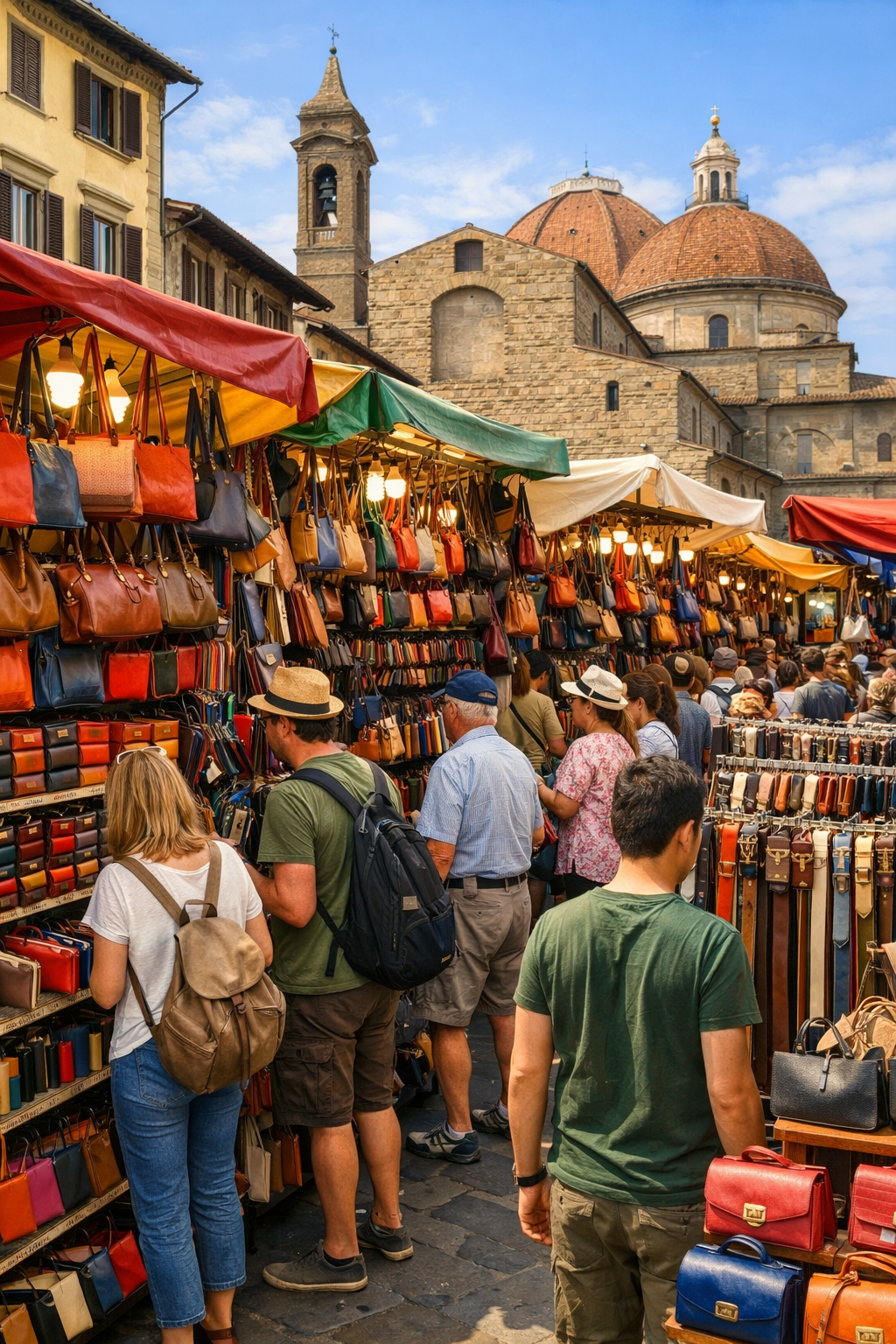
The open-air leather market around San Lorenzo church is one of Florence's most iconic shopping experiences — and also one of its most debated. Hundreds of stalls crowd the narrow streets selling bags, jackets, wallets, belts and gloves, with vendors calling out to passers-by in multiple languages.
The reality: most goods here are mass-produced, not hand-stitched by Florentine artisans. The leather quality varies enormously, from genuine full-grain Italian leather to bonded leather with a flashy finish that peels within months. That said, with the right eye — or the right questions — you can find genuinely good pieces at fair prices.
What to look for: Rub the leather with your thumb. Real full-grain leather warms slightly and develops a slight sheen; bonded leather stays cool and uniform. Ask the vendor "dove è fatto?" (where is it made?). If the answer is vague or fast, treat that as a signal.
Pricing and bargaining: Bargaining is expected here. Start at 60–70% of the asking price and work up. On bags priced at €60–€80, landing at €45–€55 is entirely reasonable. Do not pay the first price offered.
Best stalls: Stalls closest to the church itself (Piazza San Lorenzo side) tend to have slightly better quality than the ones on Via dell'Ariento. Arrive early — by 11am the market is extremely crowded and vendors are less inclined to deal.
Timing: The market runs Tuesday through Sunday from approximately 8:30am to 7:30pm. It's closed on Mondays and on major public holidays.
Oltrarno: Where the Real Artisans Work
Cross the Arno via Ponte Vecchio or Ponte Santa Trinità and you enter a different Florence. The Oltrarno (literally "beyond the Arno") neighbourhood has long been the city's artisan quarter, and it remains so today — though rents are pushing some workshops out.
This is where you'll find leather-workers, picture framers, bookbinders, furniture restorers, goldsmiths and textile weavers working in tiny botteghe (workshops) that open directly onto the street. Unlike San Lorenzo, these are real craftspeople making real things — often to order.
What to look for:
- Leather: The streets around Piazza Santo Spirito and Via Sant'Agostino have several independent leather workshops. You can often watch the maker at work and commission custom pieces. Expect to pay more — €120–€300 for a quality bag — but you're buying something genuinely handmade.
- Bookbinding and paper goods: Florence has a long tradition of marbled paper (carta marmorizzata), and Oltrarno has several artisan bookbinders and stationers. Il Torchio on Via de' Bardi is one of the best, selling hand-marbled notebooks, albums and loose paper sheets.
- Ceramics: Quirky, hand-painted ceramic pieces — tiles, tableware, decorative plates — are found in small shops scattered through the neighbourhood.
- Restoration workshops: Many botteghe here work on antique furniture and art restoration. They're not selling to tourists, but watching craftspeople at work is a genuine Florence experience.
Streets to walk: Via de' Serragli, Via Sant'Agostino, Borgo San Frediano, Via dell'Orto. Wander without a fixed plan — the discoveries are better that way.
Via Tornabuoni and the Designer District
For high-end fashion, Florence's answer to Milan's Quadrilatero della Moda is Via Tornabuoni — a wide Renaissance street lined with flagship stores for Gucci, Prada, Salvatore Ferragamo, Bulgari and Emilio Pucci (both Ferragamo and Gucci were founded in Florence). Around it, Via della Vigna Nuova and Via degli Strozzi fill out the luxury shopping zone with more Italian and international brands.
Practical notes:
- Prices here are fixed — no bargaining.
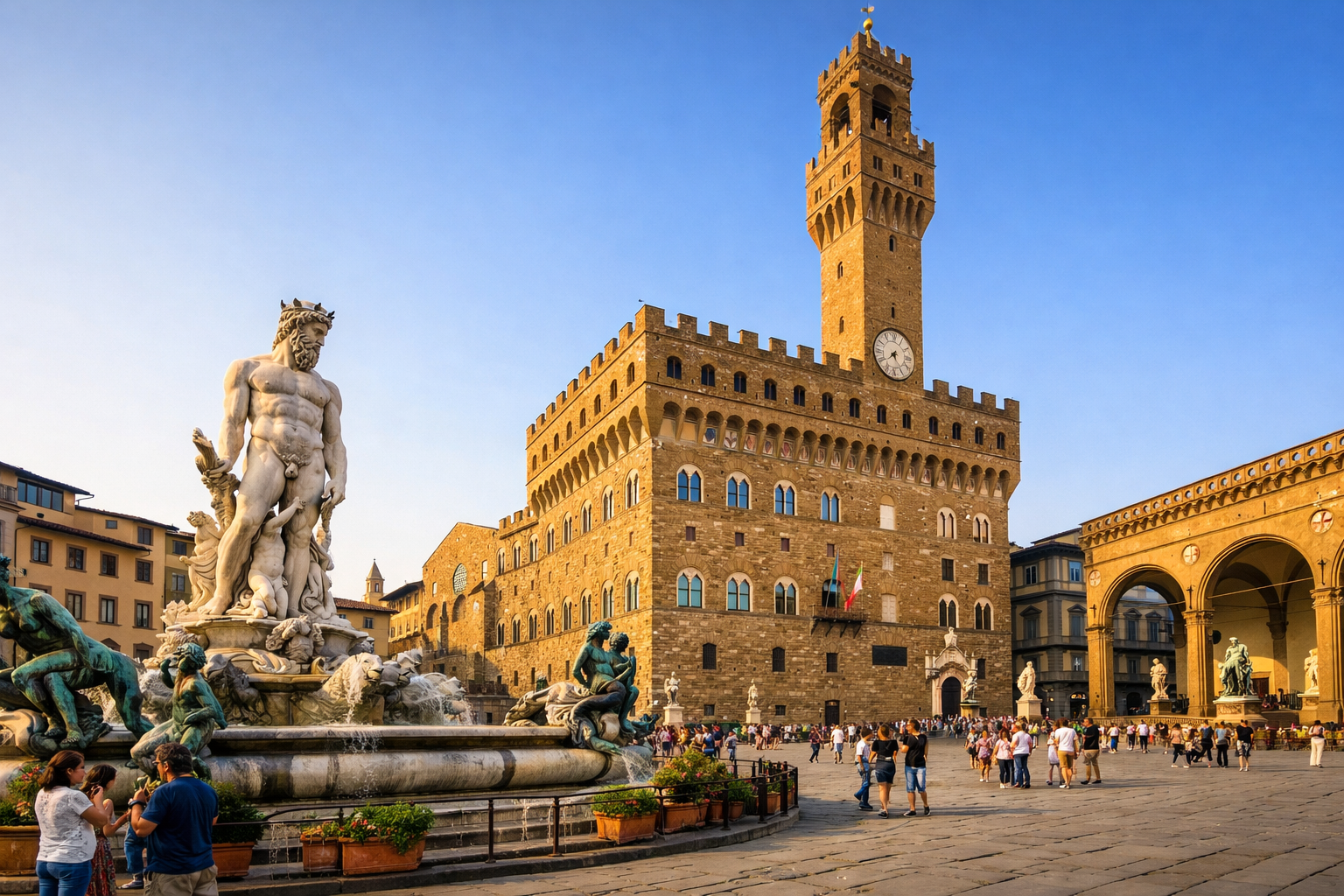
- The Museo Gucci (Piazza della Signoria) and the Museo Ferragamo (Piazza Santa Trinità) are worth visiting even if you're not buying. The Ferragamo museum in particular has extraordinary archival pieces.
- Tourist Tax Refund: Non-EU visitors spending over €154.95 at any single retailer qualify for a VAT refund (up to 22% back). Ask for a detax form at the time of purchase and process it at the airport before departure.
Off-price alternative: The Barberino Designer Outlet (about 35 minutes north of Florence by car or shuttle) has 130+ stores including Prada, Versace, Armani, and others at 30–70% off. Worth a half-day if fashion is a priority.
Mercato Centrale: Food Shopping Done Right
Mercato Centrale — Florence's covered central market, two minutes' walk from Santa Maria Novella station — is the finest food market in the city and one of the best in Italy. The ground floor is a proper working market selling meat, fish, cheese, pasta, truffles, olive oil and wine to locals and restaurants.
Best food souvenirs to buy here:
- Aged Parmesan (Parmigiano Reggiano): Buy a wedge vacuum-packed by the vendor. Lasts weeks. Far cheaper than airport shops.
- Truffle products: Truffle oil, truffle salt, truffle pasta — the market vendors sell real product at honest prices. Avoid the street kiosks near tourist sights.
- Dried pasta: Artisan pasta shapes you won't find at home — pici, maltagliati, trofie.
- Olive oil: Buy certified Tuscan extra virgin. Ask for the harvest year (annata) — recent harvest means better flavour.
- Chianti Classico wine: Ground floor wine merchants sell bottles from small Chianti estates. Buy three or four bottles in a sturdy bag — it's the best gift you can bring home.
Practical tip: The top floor of Mercato Centrale has become a food hall with restaurants and street food. It's good for lunch but expensive for shopping — stick to the ground floor for actual market prices.
Stationery and Paper Goods: A Uniquely Florentine Souvenir
Florence has been producing marbled paper (carta marmorizzata) since the 16th century — the technique arrived from the Ottoman Empire via Venice and took root in Florentine bookbinding workshops. It remains one of the city's most distinctive craft traditions.
What it is: Coloured inks are floated on a water-and-ox-gall mixture, combed into patterns, and paper is laid on top to transfer the design. Every sheet is unique.
Where to buy:
- Il Torchio (Via de' Bardi 17, Oltrarno): Artisan workshop and shop, genuinely hand-marbled. Best selection in Florence.
- Alberto Cozzi (Via del Parione 35): Historic workshop, slightly touristy now but still authentic product.
- Scriptorium (Via dei Servi 5–7): Near the Duomo, stocks marbled paper plus pens and writing instruments.
What to buy: Notebooks and photo albums make the most practical souvenirs. Single sheets of marbled paper are beautiful but harder to transport. Leather-bound notebooks with marbled endpapers are the classic Florence gift.
Antique Markets and Vintage Finds
Florence has a serious antiques scene, and unlike many Italian cities, you can find it in approachable settings rather than just specialist auction houses.
Piazza dei Ciompi: The Oltrarno neighbourhood hosts a small permanent antiques market in this square daily, with a larger monthly fair (usually the last Sunday of the month) that expands to the surrounding streets. Vintage prints, postcards, jewellery, ceramics, old books, and household objects at honest prices. Arrive by 9am for the best picks.
Mercato delle Pulci (Flea Market): Near Piazza dei Ciompi. Small, local, not tourist-oriented. Good for mid-century Italian ceramics and glassware.
Antique shops on Borgo Ognissanti: This street near the Arno has a cluster of serious antique dealers specialising in furniture, paintings and decorative arts. Prices are high but the quality is genuine.
Tip: If you're buying antiques with genuine value (certified artwork, period furniture), ask for a certificate of authenticity and check export regulations — Italy restricts the export of significant cultural property.
Where to Stay for Great Shopping Access
Staying near Florence's historic centre puts you within easy walking distance of all the major shopping areas. The San Lorenzo market and Mercato Centrale are 10 minutes on foot from Santa Maria Novella station. The Oltrarno artisan quarter is 20 minutes walk across the Ponte Vecchio. Via Tornabuoni is 12 minutes from the station on foot through the historic centre.
Guido Monaco Apartment is located steps from Santa Maria Novella station — one of the best-placed bases for exploring Florence's shopping districts. After a morning at the San Lorenzo leather market or an afternoon browsing Oltrarno workshops, you're always within easy walking distance of home. The apartment's terrace is the perfect spot to unwrap your finds at the end of the day over a glass of the Chianti you picked up at Mercato Centrale.
The apartment sleeps up to 3 guests in 55m², making it well-suited for a shopping-focused trip where you'll be bringing more luggage home than you arrived with. Check availability at Guido Monaco Apartment on Booking.com.
Practical Tips for Shopping in Florence
Avoid these common mistakes:
-
Don't buy leather from street kiosks near tourist sights. The Ponte Vecchio, Piazza del Duomo and Piazza della Signoria are surrounded by vendors selling low-quality goods at high tourist prices. Even a 10-minute walk in any direction gives better options.
-
Check receipts and weigh market vegetables yourself. The markets are generally honest, but short-weighting and receipt errors do occasionally occur. It's not common, but glance at the scale.
-
Understand shop hours. Most Florence shops close for pausa pranzo (lunch break) from about 1pm to 3:30pm. Monday mornings, many shops are closed entirely. Plan accordingly.
-
Don't confuse "Made in Italy" with "Made in Florence." Much mass-market "Italian" leather is manufactured in industrial facilities in Puglia or imported from China and finished in Italy. Ask specifically "fatto a Firenze?" (made in Florence?) when buying from artisan shops.
-
Tax-free shopping threshold: Non-EU residents spending over €154.95 in a single shop can claim a VAT refund. Ask for a detax form before paying. Process at Florence airport before check-in.
-
Cash is useful at markets. San Lorenzo stalls and most antiques vendors are cash-only or prefer it. ATMs are plentiful in the centre.
Book Your Florence Shopping Base
Florence rewards unhurried exploration — and the best shopping discoveries happen when you're not on a tight clock. Staying in the historic centre means you can pop back to drop off purchases, rest, and head out again rather than hauling bags through the heat for hours.
Guido Monaco Apartment puts you in the perfect position: a 9.0-rated property near Santa Maria Novella station, with 55m² of space for you and your bags. Check dates and book directly here.
FAQ: Shopping in Florence
When is the best time to shop in Florence? Early morning (before 10am) for markets — stalls are freshest, vendors are less harried, and bargaining is more relaxed. For boutiques and shops, weekday afternoons are quietest. Avoid Saturday afternoons in high season — the centre is extremely crowded.
Is bargaining acceptable in Florence? At outdoor markets (San Lorenzo, Piazza dei Ciompi, flea markets) — yes, absolutely expected. At fixed shops, boutiques, and artisan workshops — no. A polite request for a small discount on a large purchase in a boutique may occasionally succeed, but don't push it.
How do I spot genuine handmade leather goods? Look for slight irregularities — hand-stitching is never perfectly uniform. The edges of genuine hand-cut leather are burnished and slightly rounded, not cleanly machine-trimmed. The leather should have a natural grain that varies across the surface. Ask the artisan to show you the underside (suede) — quality leather has consistent, clean suede rather than a rough, uneven backing.
What are the best authentic Florence souvenirs to bring home? Hand-marbled paper goods, artisan leather (bought from a workshop, not a market stall), local Chianti wine from Mercato Centrale, aged Parmigiano Reggiano, Florentine-style limoncello or grappa from an enoteca, and ceramic pieces from Oltrarno workshops. Avoid mass-produced Pinocchio figures, plastic Duomo replicas, and anything labelled "Made in EU" in place of a specific country.
Is the Barberino Designer Outlet worth the trip? For luxury fashion shoppers — yes. The 35-minute drive or shuttle ride gives access to 130+ brands at genuine discount prices, with a much more relaxed atmosphere than Via Tornabuoni. Budget a full morning or afternoon. Book the shuttle in advance in summer.
Are there Sunday markets in Florence? The Piazza dei Ciompi antiques fair (last Sunday of the month) is excellent. A small weekly market runs on Sunday mornings near the Cascine park (Cascine market), selling clothes, food and household goods — very local, very inexpensive, very Florentine. Not touristy at all.
What should I absolutely not buy in Florence? Anything with an "Authentic Florentine Leather" tag sold by a vendor who can't tell you who made it. Mass-produced ceramics painted with generic Tuscan scenes. Synthetic leather goods sold near tourist sights. Overpriced wine in decorative bottles from souvenir shops — walk two streets away and buy the same wine for a quarter of the price.
Book Your Florence Stay
Experience the comfort of Guido Monaco apartment — perfect location, modern amenities, and a private terrace.